
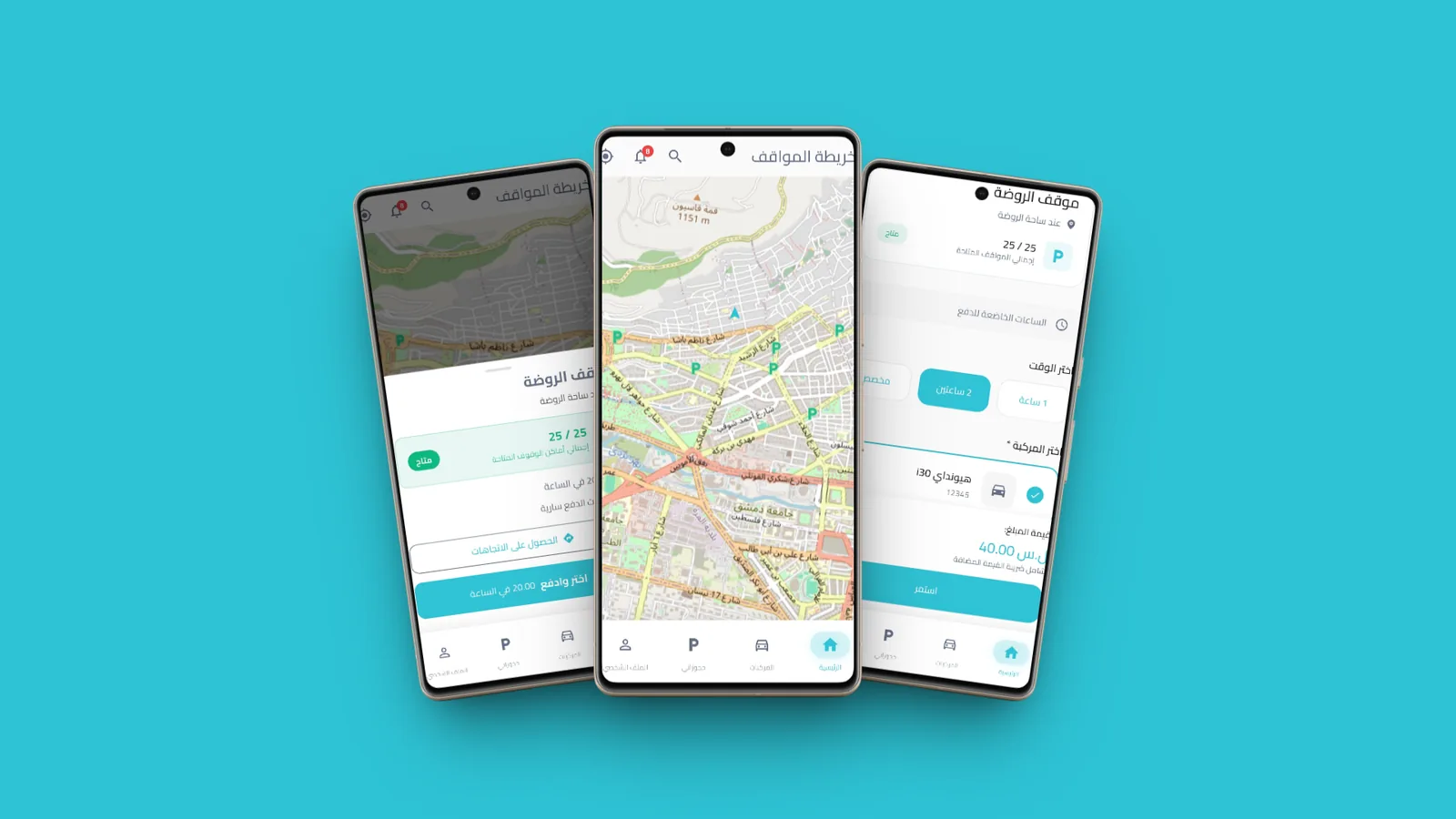
2 roles
driver and owner shells
OSM
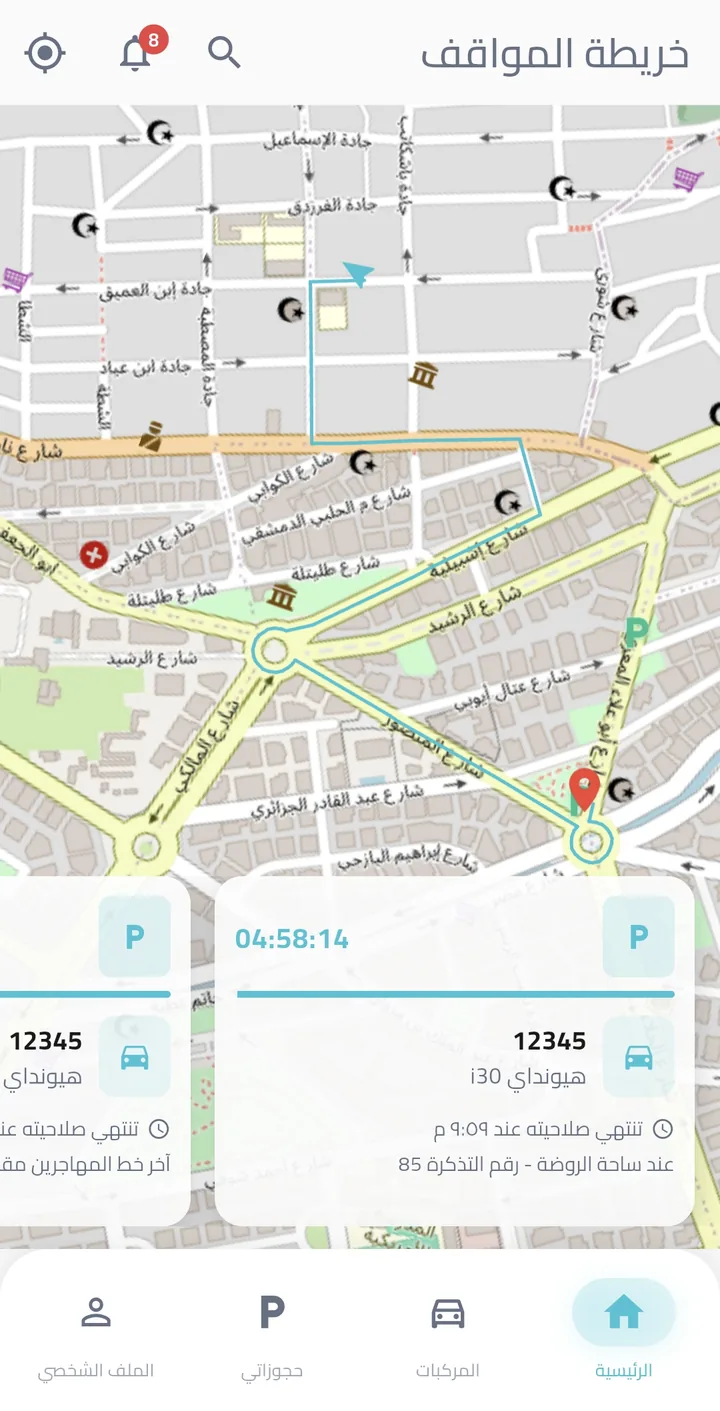
map discovery and live routes
409 → pay
a duplicate booking resumes, not fails
Solo
architecture, DI, and navigation
Project context
One app for the driver looking for a spot and the owner renting it
Drivers need to find an open spot near where they’re going, hold it, and pay only for the time they use. Lot owners need to list their spaces and see how full they are — without running a second piece of software.
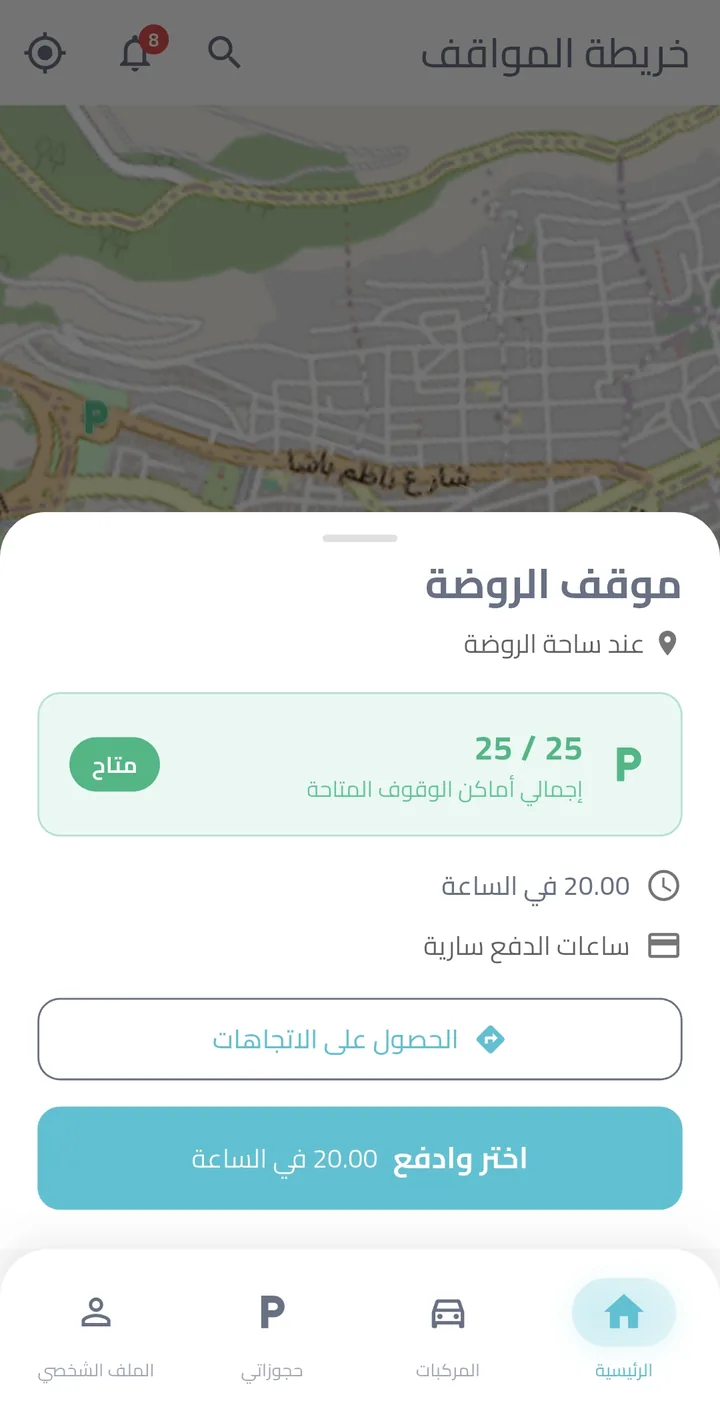
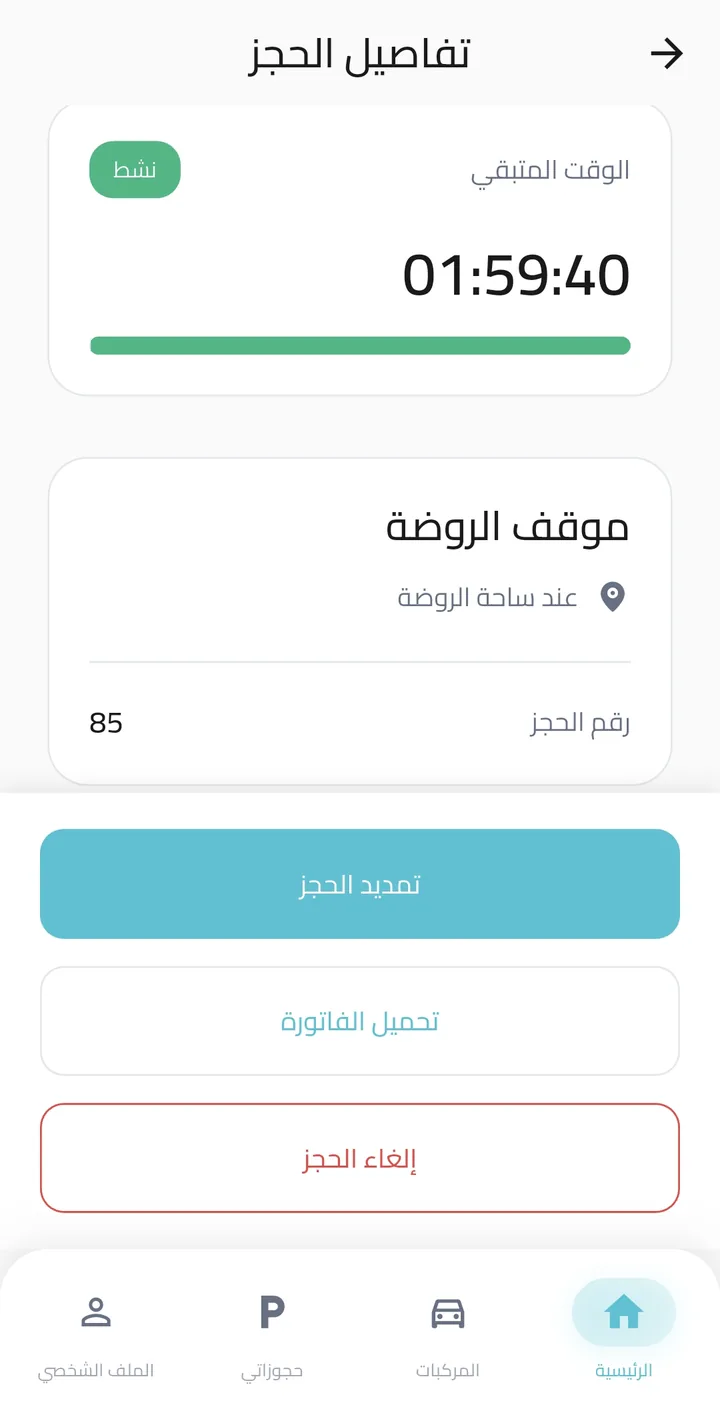
Mawaqef handles both. Drivers discover lots on an OpenStreetMap view with live availability, book and pay (including Sham Cash), extend a running session, and manage their vehicles. New owner accounts stay locked out of the owner shell until they’re approved.
My role
Flutter Developer on a client project, and the only developer on the mobile app. There was no shared platform underneath this one, so the structure is mine end to end.
My contribution
- Driver flows: map discovery, parking sessions, booking, and payment.
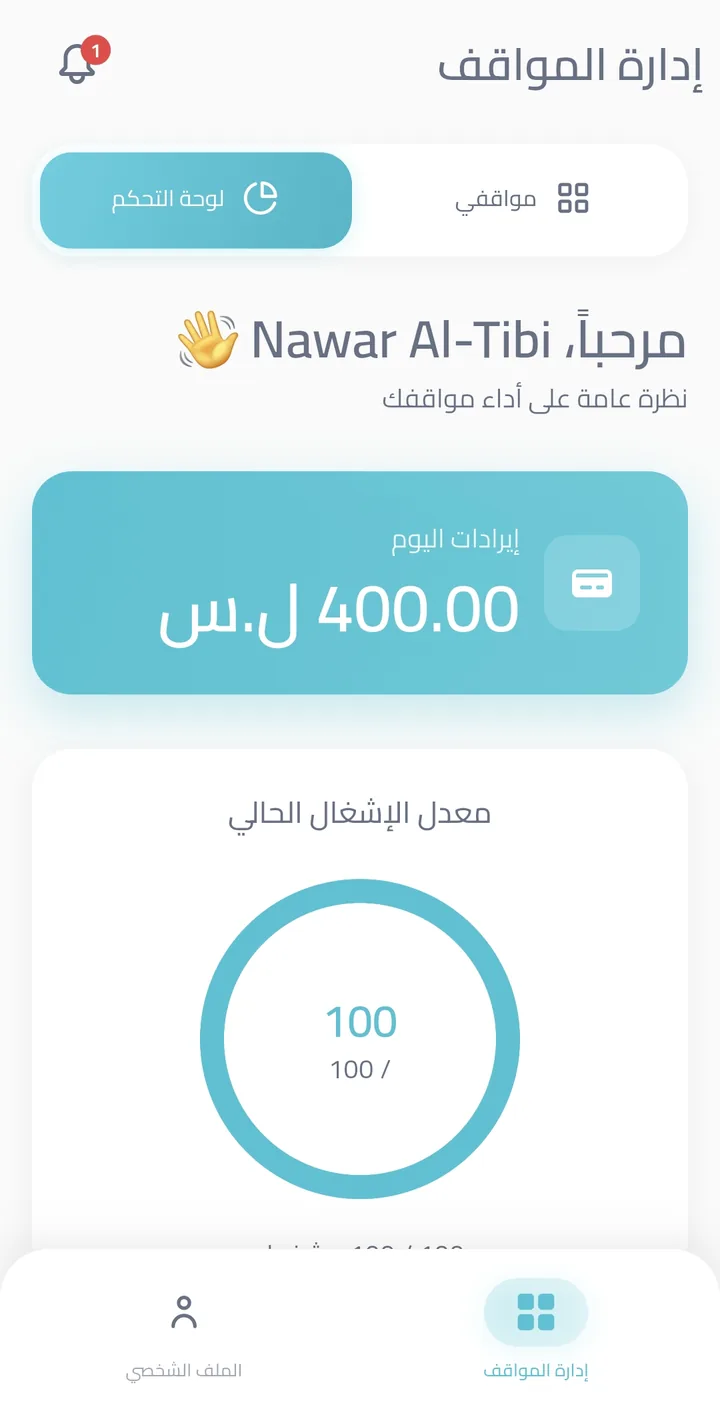
- Owner flows: approval gate, lot management, and the occupancy dashboard.
- Feature-first structure with BLoC over a hand-built Dio + get_it setup.
- A go_router shell that swaps between driver and owner navigation at login.
- Arabic and English UI, sized with flutter_screenutil across devices.
Engineering challenge
Recovering a booking that already succeeded
If a booking succeeds while the connection drops, retrying can create uncertainty: the retry hits the API for a booking that already exists. A generic error would leave the driver guessing whether they’ve booked — or paid.
Mawaqef recognizes the HTTP 409 on booking creation as a signal to resume. It reads the existing booking back from the response and takes the driver straight to that booking’s payment flow — no duplicate, no dead end.
How it works
Small decisions that made the app easier to trust
409 means resume
A conflict on booking creation is treated as “this booking already exists”, not as a failure, and routes to the existing booking’s payment step.
Switchable API host
The API host can be changed from a settings dialog, so one build could be pointed at different backend environments during device testing without a rebuild.
Role-based shells
Drivers and owners get separate navigation shells from one go_router config, and an owner account can’t reach its shell until it’s approved.
Limitations and next improvement
I prototyped an offline request queue in Hive that would store booking and payment actions without signal and replay them later — then deliberately left it unwired rather than shipping a partial reliability mechanism.
A queue that looks like it works in a demo and silently drops requests in a dead zone is worse than an app that’s honest about needing a connection. Finishing that wiring properly is the first item if the project continues.
Stack
- Flutter
- BLoC
- get_it
- Dio
- go_router
- flutter_osm_plugin
- Geolocation
- Hive
- SharedPreferences
- flutter_screenutil