
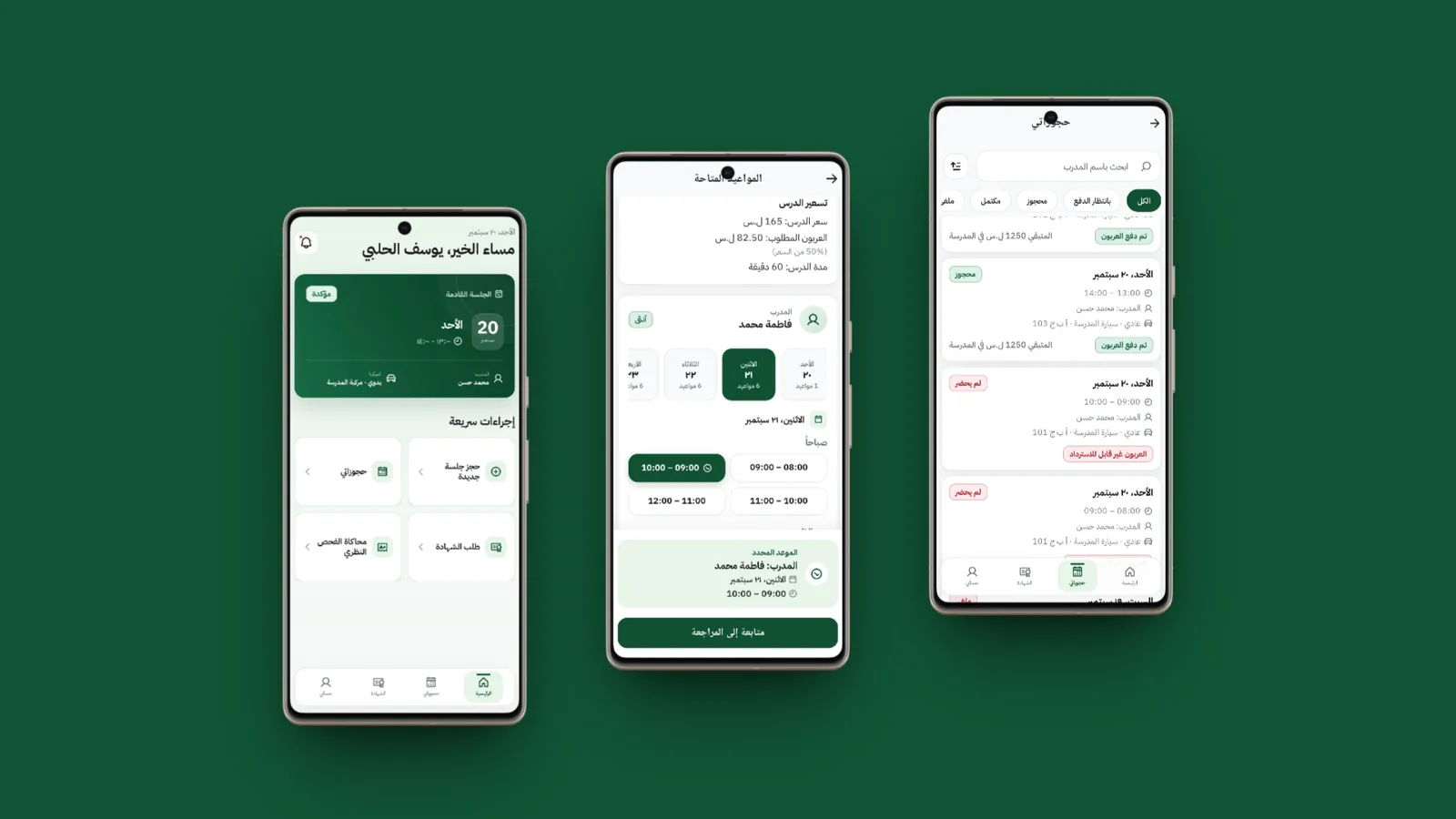
2 roles
student and instructor experiences
130+
automated test cases
AR / EN
bilingual from the first screen
CI
format, analyze, test, build on every push
Project context
A driving school running on phone calls and cash
Lessons were booked by phone, paid in cash on the day, and tracked in nobody’s system. Two students could turn up for the same hour, and a slot could only be held once someone at the school confirmed it by hand.
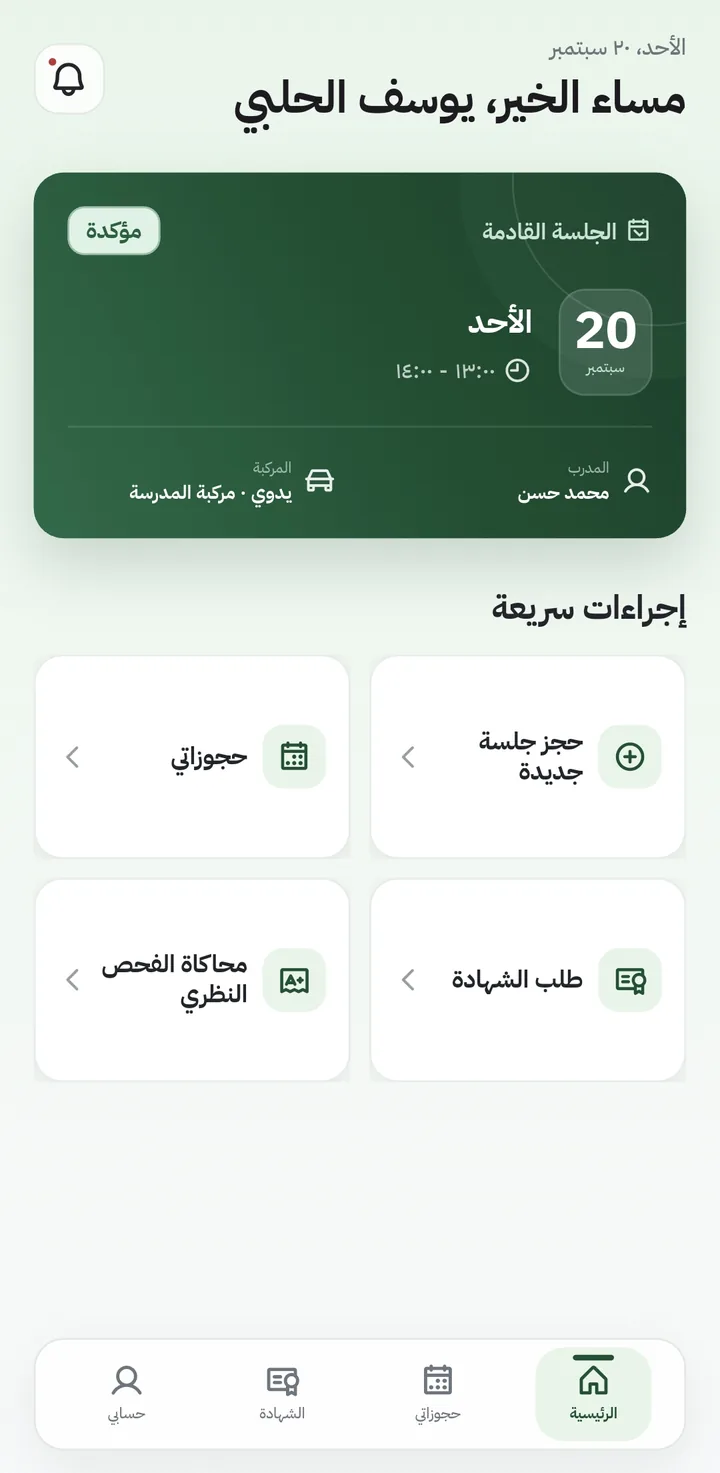
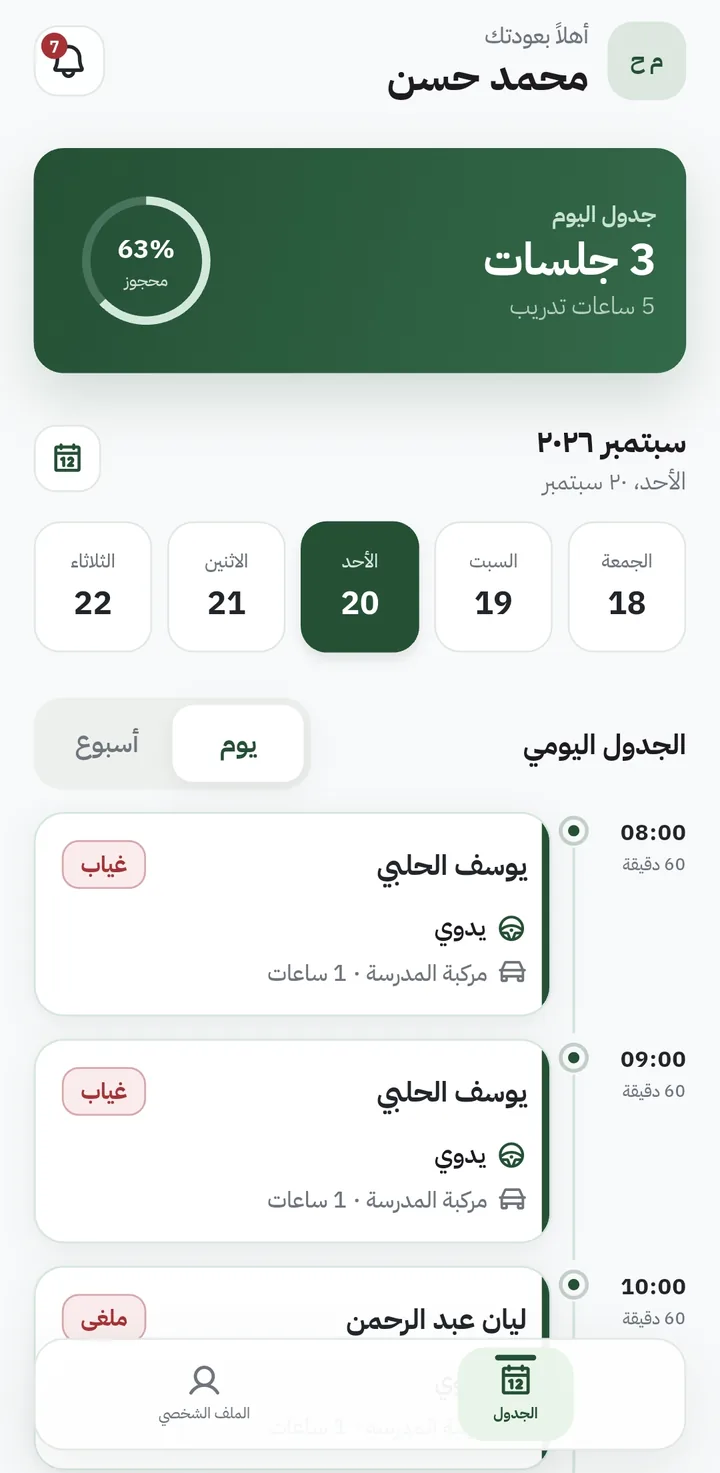
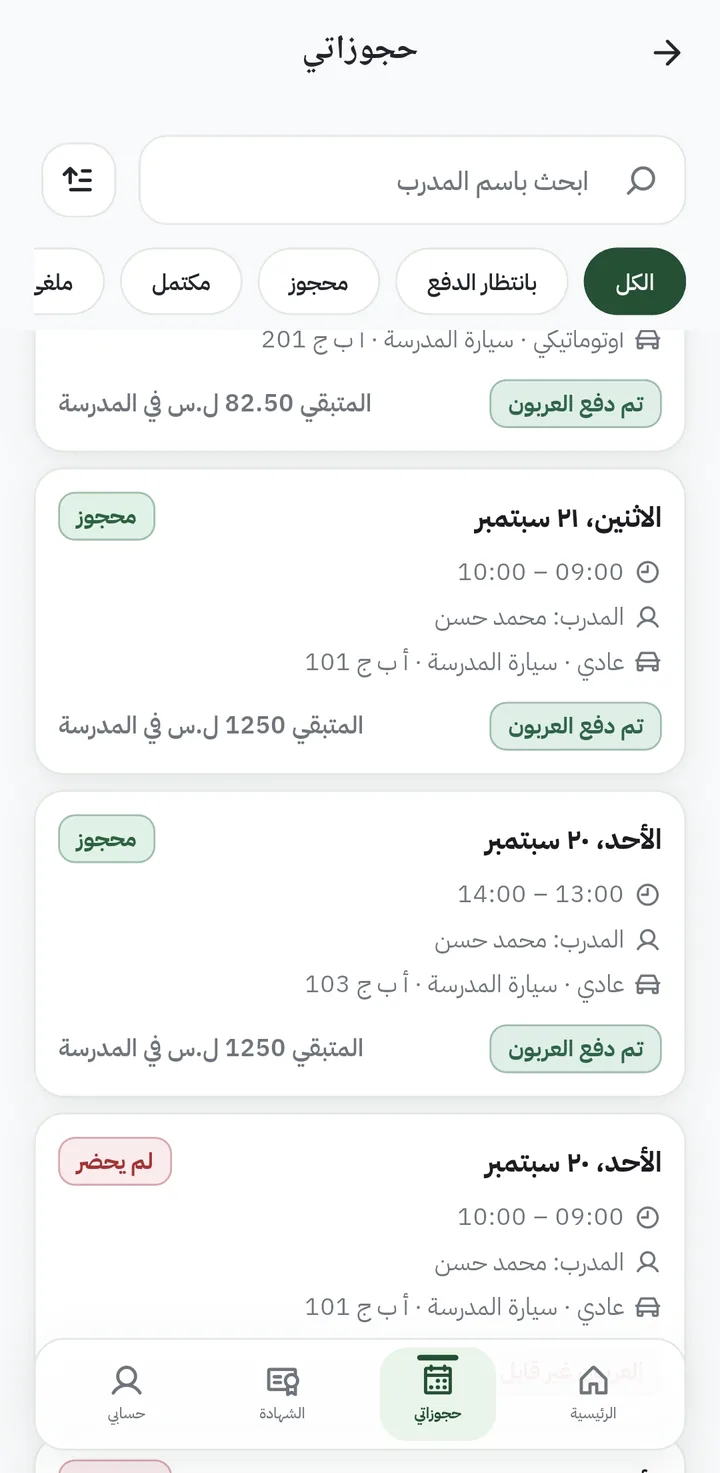
Qeyadah gives students one place to book, pay a deposit, practise the theory exam, and request their certificate. Instructors get their own experience for the week ahead, attendance, and earnings. Both run in Arabic and English from the same codebase.
My role
I was the sole Flutter developer on the project, responsible for the mobile feature implementation and integration with the shared platform layer.
My contribution
- Student experience: home, lesson booking, and the deposit flow.
- Instructor experience: schedule, attendance, and earnings views.
- Theory exam practice and certificate requests.
- Arabic and English localization across every screen.
- Feature state with Cubit over a domain layer returning typed Either results.
Engineering challenge
A deposit that releases the slot on its own
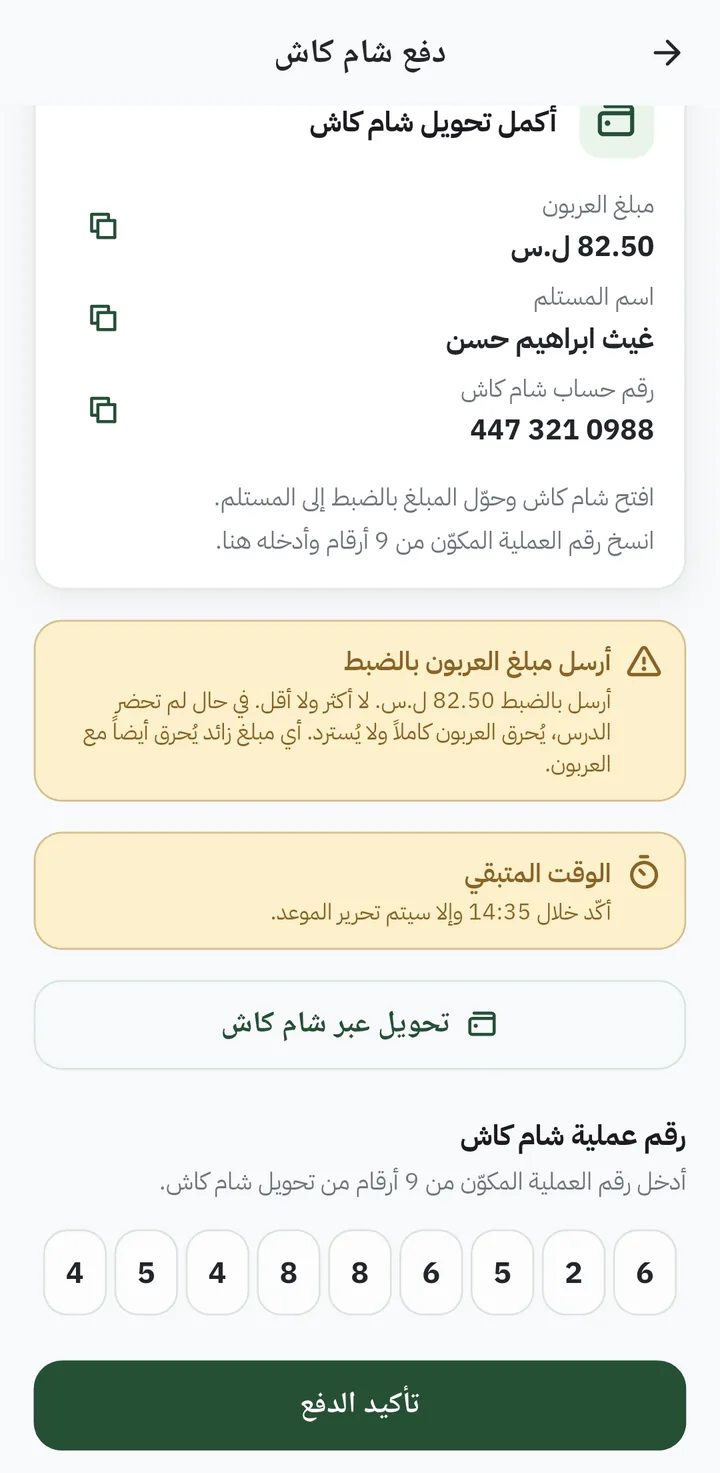
A student holds a slot by sending half the lesson price through Sham Cash and entering the transaction number in the app. The school verifies the payment, and the booking is confirmed.
If the money never arrives, the hold has to expire without anyone stepping in — otherwise one unpaid booking can block an instructor’s calendar indefinitely. The deposit screen makes the deadline visible with a live countdown, and the amount calculation behind it is covered by automated tests, because a wrong number here is a real money problem.
How it works
What I decided, and how it’s checked
Typed failures
Each feature is a Cubit over a domain layer that returns Either<Failure, T>, so a failed payment and a dropped connection reach the UI the same way: a localized message with a retry.
Conflict handling
When two students race for a slot, the API answers with HTTP 409. The current implementation parses the conflict reason from the API message text to pick the right localized explanation.
130+ automated test cases
Unit and bloc tests with bloc_test and mocktail cover booking, payment, and amount logic — the parts where a regression costs a student money or a slot.
CI on every push
GitHub Actions runs format → analyze → test → Android build on every push, so a broken build or a failing test is caught before review.
Limitations and next improvement
The current 409 conflict handling relies on backend message text. It works, but it breaks silently the day someone rewords that message.
A stable conflict code would make the contract safer and easier to localize. If the backend contract evolves, I would map a conflict_code to copy on the client — same experience for the student, with no dependency on wording neither side promised to keep.
Stack
- Flutter
- Dart
- Cubit / BLoC
- Clean Architecture
- fpdart Either
- Dio
- go_router
- get_it + injectable
- Firebase Cloud Messaging
- bloc_test / mocktail
- GitHub Actions CI
Integration tests are scaffolded but not yet complete.